The word handmade gets thrown around a lot these days.
Sometimes it feels like it’s lost all the fingerprints it once had.
Scroll through any marketplace, and you’ll find entire empires built on the word. Rows of “handmade” jewelry shipped straight from factories. “Handmade” art prints that have never met a human hand except when they were boxed for shipping. Even the big-box stores have caught on — a “handmade aesthetic” section curated by algorithms that think rustic equals real.
It’s not that the world suddenly got worse at making things. It’s that we got better at imitating the look of having made them.
Meanwhile, those of us who actually make things by hand — really make them, start to finish, materials and all — are left trying to explain what should be self-evident: that handmade means it passed through human hands, not marketing hands.
🌿 The Word That Got Hollowed Out
It used to mean something sacred, didn’t it? Handmade was the antithesis of factory. It meant time, attention, imperfection, the quiet dignity of process. It meant someone sat at a table and did the work, probably with a mug of tea gone cold and a cat asleep in the scraps.
Now it’s become a keyword — a personality trait for mass production. A label slapped on anything slightly quirky or imperfect-looking, as if “handmade” is just a synonym for “kind of weird, but in a fun way.”
The irony is that this dilution doesn’t just cheapen the word; it cheapens the relationship between maker and buyer. Because when everything is “handmade,” nothing really is.
And that’s the space I find myself in — the odd middle ground where I’m both artisan and small business, shouting into the algorithmic void that yes, I actually made this one. With my actual hands.
✨ What It Really Looks Like
When I say handmade, I don’t mean I bought parts and assembled them.
I mean I went outside.
I mean I’ve walked the tree line to collect fallen feathers and quills. I’ve sat with a pocketknife and a bowl of water, cleaning each one, checking for damage, turning what the wind left behind into something that might someday become adornment or art.
I’ve crushed black walnut hulls to make pigment — the kind of deep, earthy brown you can’t buy in a tube. It smells faintly of forest floor and tannins, and it stains everything it touches, including my fingertips for a week. When I paint with it, I’m painting with memory. With geography.
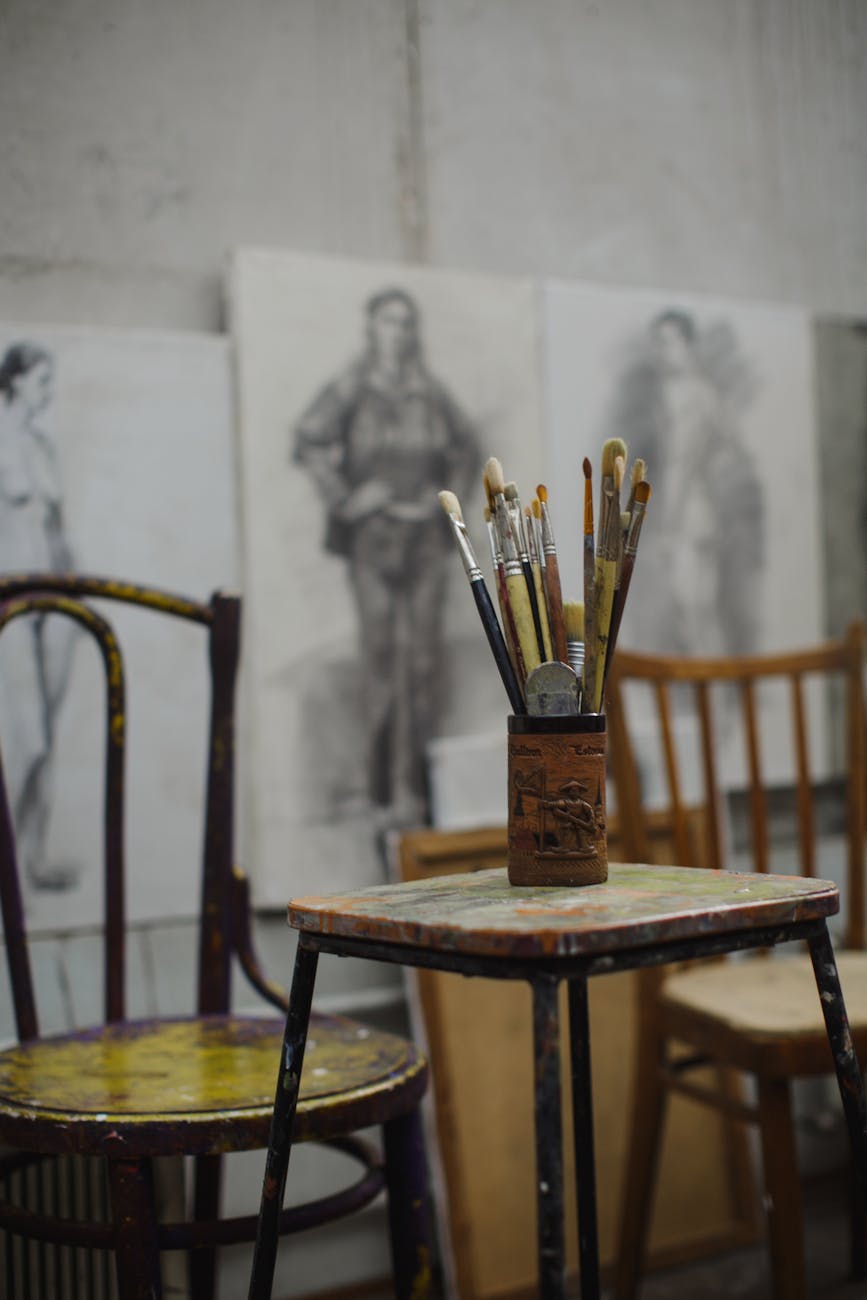
There are days my studio looks like a cross between a witch’s kitchen and a crow’s nest. Bottles of pigment, wire spools, feathers, brushes, a scattering of sketches. Every object has a story, and every story began as a walk, a find, a moment of seeing something not for what it is but for what it could become.
Handmade isn’t a marketing category for me. It’s a way of living that keeps me connected — to the land, to the materials, to the act of creation itself.
🕯 Between Hands and Algorithms
Of course, all this making still has to meet the internet eventually.
It has to be photographed, uploaded, described, tagged, optimized, posted, shared, and sold.
That’s where the odd dissonance hits: trying to translate something born of breath and patience into the language of “engagement” and “reach.”
I’ll spend a week gathering and refining materials, painting by hand, or assembling a jewelry piece that required twenty small miracles of patience — and then realize the algorithm prefers a thirty-second video with upbeat music.
There’s something almost comical about it. The handmade artisan, competing for attention with drop-shippers and mass-producers who’ve learned to fake imperfection for the aesthetic.
Some days it feels like I’m whispering into a hurricane. But I keep whispering anyway. Because someone, somewhere, will recognize the difference between texture and template.
🜹 The Quiet Rebellion of Making
Making by hand in an automated world is an act of resistance, but also of care. It’s refusing the speed and sameness that define most of what we consume. It’s choosing to slow down long enough to notice what’s real.
There’s a particular kind of reverence in working with your hands — whether it’s shaping wire, blending pigment, or painting feathers you gathered yourself. You learn the textures of patience. You start to recognize that small flaws are what make a thing alive.
Sometimes I think about how my jewelry or illustrations carry the weather of the day they were made — how the humidity changes the way metal bends, how the temperature affects how pigment dries. No machine could replicate that. It’s not efficient, but it’s honest.
That’s the hidden truth of handmade: it’s as much about the maker’s life as it is about the finished object. You’re not buying a product; you’re buying a process. A mood. A story etched into material form.
🌾 The Myth of “Scalable Authenticity”
There’s this strange expectation online that if something’s good, it should scale. That success means growth, and growth means volume. But handmade doesn’t scale. Not really. Not without losing the very soul that made it worth doing.
When corporations borrow the handmade look, they’re selling the illusion of intimacy — the idea that something in your hands was once in someone else’s. But you can’t mass-produce intimacy. You can only simulate it.
I think that’s why people still seek out small artisans, even when the big players flood the market. There’s a hunger for something slower, something human. For knowing that when I say “handmade,” it’s not metaphor. It’s method.
🪶 Touch as a Form of Truth
Every handmade thing carries a kind of fingerprint — not literal, but energetic. The way the brush moved, the way the quill curved, the moment you decided a line was done instead of perfect. Those are all choices made by hands, guided by heart.
When I illustrate, I’m not trying to erase the hand that drew it. I leave the strokes visible, the textures uneven. It’s how the piece breathes. When I make jewelry, I let the natural irregularities of feather or stone stay visible. I’m not editing nature into submission. I’m collaborating with it.
That collaboration feels like conversation — the material says what it wants to be, and I listen. Sometimes it argues. Sometimes it’s right.
In that sense, every handmade object is alive — not because it moves, but because it remembers. It remembers the hands that shaped it.
🜂 Why It Still Matters
People sometimes ask why I bother — why go through the trouble of sourcing materials, of doing it all myself, when there are easier ways?
The answer is simple: because the world is loud, and making things by hand teaches me to listen.
When I sit down to paint, or wrap a quill, or grind pigment, the noise drops away. What’s left is presence — the slow rhythm of creation that asks nothing more than your attention.
Handmade isn’t nostalgia. It’s a return. A way to stay human in a system that keeps trying to turn us into extensions of our devices. It’s a reminder that we still have the capacity to shape, mend, build, and imagine with our own hands.
And maybe that’s why people are drawn to it, even if they don’t realize why. In every handmade object, there’s evidence of care — proof that someone, somewhere, took time they didn’t have to make something the world didn’t demand.
That’s the quiet kind of magic I still believe in.
🌙 In Closing
When I say “handmade,” I mean it in the oldest sense of the word — made by hand, with heart, with time.
I mean the pigment that came from black walnuts gathered by hand. The quills cleaned and shaped. The feathers collected with gratitude. The illustrations painted one stroke at a time, with brushes that will outlive their bristles before they ever run out of stories.
I mean the small rituals of creation that don’t fit neatly into product descriptions.
Maybe “handmade” doesn’t mean much anymore to marketing departments. But to me, it still means something sacred: that the line between art and life is porous. That our hands still remember how to make meaning.
And that as long as there are people willing to choose made by hand over made to sell, the word — and the work — will keep its soul.
🌾 Quiet Persistence
🌿 Handmade, still. Always.
🌿 If reflections like this speak to you, you can support independent, actually handmade work through the Mutual Aid Fund or by exploring the Shop: Made by Me | Oddities & Convenience. If you’d like: you can follow us on itch.io or on ko-fi as well.
Every contribution helps keep this space ad-free and alive — one small light in the wider web of things.