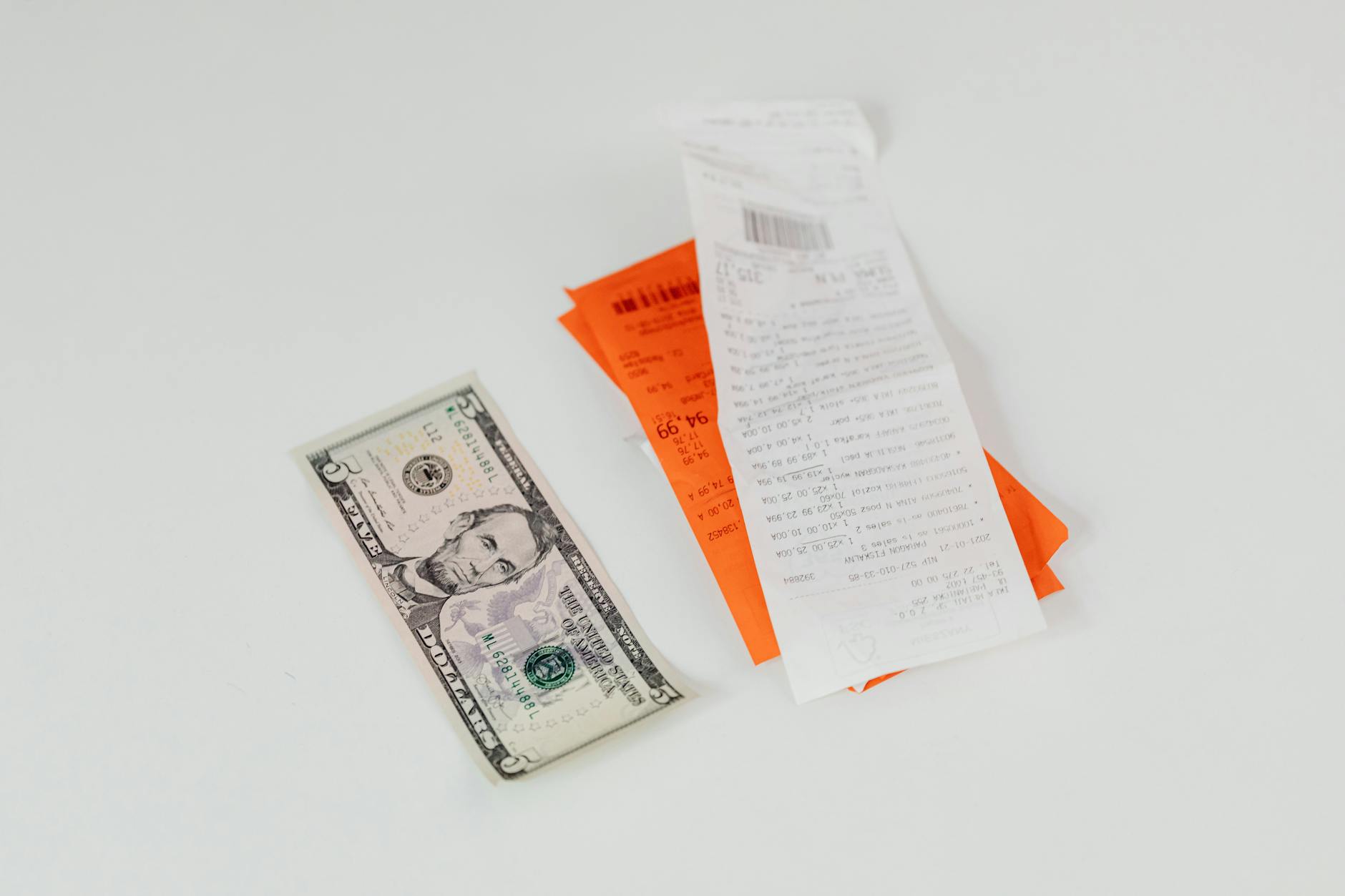
There’s a certain kind of moral cleanliness people want to feel these days.
They want to be good consumers, conscious supporters, enlightened participants in a system they claim to despise but cannot live without. They buy from small businesses, repost infographics about mutual aid, share “support artists!” memes, and talk wistfully about community economies—the imagined utopias where everyone trades and barters and no one ever has to name a price.
It sounds gentle. It sounds ethical. It sounds like care.
But underneath that performance of purity is a reflex as old as empire: the desire to benefit from another’s labor without ever touching the dirty reality of exchange.
We’ve built a culture where wanting to appear morally above capitalism often ends up reproducing its cruelties—only now dressed in the language of virtue.
You can see it in the comments that appear under artists’ posts: “This should be free.” “Don’t you believe in community?” “Money ruins the sacred.” You can see it in the corporate adoption of “community” as marketing jargon. You can see it in the influencer who romanticizes a “mutual support economy” while quietly monetizing every interaction behind the scenes.
What masquerades as generosity is often a refusal to participate in reality.
It’s not that the impulse toward generosity is wrong—it’s that, in a capitalist world, the performance of generosity without material reciprocity becomes another form of extraction.
We’ve confused purity with goodness, and in doing so, we’ve created a moral theater where the only people punished are the ones still trying to live by their own labor.
The Myth of the Gift
The anthropologist Marcel Mauss, writing in 1925, described the gift economy as a social structure held together by obligation—not by profit, but by reciprocity, by the shared understanding that giving creates relationship. In the cultures he studied, gifts were never free. Every offering carried the weight of return.
Those systems worked because the community itself was the infrastructure. Everyone contributed; everyone depended. The gift was part of the rhythm of survival.
Modern capitalism took the aesthetics of that world—the beauty of shared care—and stripped it of its balance. The result is the myth of the modern gift economy: the idea that we can simply behave as if we already live in a post-capitalist world, even while every necessity around us remains priced in dollars.
It’s a fantasy of moral nostalgia. It sounds like, “We don’t need money; we just need to look out for each other.”
But what it usually means is, “Someone else will eat the cost so I can feel good.”
People invoke the gift economy like it’s a charm against guilt: “Why charge your friends? Why not barter? Why not trade skills?” But bartering assumes equality of circumstance—an assumption that collapses the moment someone has to pay rent.
In a true gift economy, everyone’s survival is bound together. In ours, generosity is optional. The people who romanticize it the loudest often have someone else footing their bills.
The False Refuge of Barter
Barter has become the secular sacrament of anti-capitalist wishful thinking.
It lets people imagine they’ve transcended the market while still relying on the market for everything that matters. “I’ll trade you art for groceries,” someone says—but the grocer still needs to pay suppliers in cash. “Let’s exchange energy instead of money,” another says—but the landlord doesn’t take exposure or intention as legal tender.
Barter only works when both parties have a shared safety net.
When one side has real economic leverage and the other doesn’t, the “trade” becomes a kindness that costs the poorer party more than it gives back.
The modern barter aesthetic—the cheerful “just trade and barter :)” refrain—is a kind of moral cosplay. It gestures toward socialism without any of the infrastructure that makes socialism possible. It’s the fantasy that we can act like communalists while the lights still run on privatized grids and the water bills still arrive on time.
When you’re surrounded by people who only see the value of cash, expecting someone to perform a socialist or communal ideal of bartering is cognitive dissonance that borders on cruelty. It demands that one person step outside the economy while still living inside it.
And the cruelest part? It turns survival itself into a test of purity. If you accept money, you’re compromised. If you refuse, you’re sainted. Either way, the system wins, because you’re still broke.
The Morality of Money
Money is not moral or immoral. It is a tool—and like any tool, it can build or destroy depending on how it’s used.
But somewhere along the way, we decided that not touching money made us cleaner. Artists are told they should make for love, not profit. Spiritual workers are told to give freely or risk “corrupting” their gift. Activists are told to labor unpaid because “it’s for the cause.” Every field that traffics in care, beauty, or meaning is told to separate itself from money to remain pure.
That isn’t ethics. That’s a control mechanism.
It keeps the people who create meaning dependent on the people who can afford to pay for it.
And ironically, the guilt about money becomes the engine of the very capitalism it’s supposed to resist.
Corporations can sell you “ethical consumption” because you’re desperate to feel moral in a system that punishes you for survival. Churches and nonprofits can leverage volunteer labor endlessly because you’ve been taught that holiness and poverty are the same thing.
In this worldview, asking to be paid becomes a confession of greed.
The result: a society where those who do the most essential emotional, artistic, and spiritual labor are perpetually impoverished, while those who sell the aesthetics of care become rich on the margins.
The Aesthetic of Generosity
By now, the market has learned to mimic rebellion better than the rebels ever could.
“Community” is a brand pillar. “Support small artists” is a tagline. Corporations speak in the language of care, packaging the very moral impulses that once resisted them. We are sold the illusion of conscience with every transaction—eco-friendly, fair trade, handmade, ethical. The consumer is invited to feel generous simply by consuming “responsibly.”
This is the great seduction of late capitalism: it turns every critique into a product category.
Buy a candle that donates a dollar to charity; wear a shirt that says be kind; subscribe to a platform that “empowers creators.” The system doesn’t mind you feeling good—it just needs you to keep buying.
And this logic trickles down.
Individuals absorb the same vocabulary of virtue. They want to feel generous without giving much, supportive without committing, radical without risk. They say, “I love what you’re doing; I wish I could pay you,” as if admiration were a form of payment. They commission “collaborations” that somehow never include money. They post “amplify this artist” while expecting the artist to remain humble, grateful, and broke.
The aesthetic of generosity is a soft power that keeps everyone in their place. It flatters the conscience of the comfortable while moralizing the poverty of the maker.
And here is where I have to pause and say plainly: I’m not preaching a new ideology.
I’m not a socialist romantic, nor a communist theorist, and certainly not a conservative moralist clutching pearls over “handouts.” I’m a worker—an artist—who understands that every system so far has found a way to turn care into currency. My concern isn’t which flag flies over the factory; it’s who’s still inside it when the shift ends.
The Real Commons
If there is a way out, it won’t come from aesthetic rebellion. It will come from structure—from people building small, durable commons inside the cracks of empire.
A real commons doesn’t just wish for community; it builds it with governance, labor, and accountability.
You can see glimpses of it: artist-run studios that pool resources to rent a shared space; agricultural co-ops that refuse corporate distributors; community libraries of tools and equipment; worker-owned presses that divide profit by participation instead of hierarchy.
These experiments are messy, bureaucratic, imperfect—but they’re real.
They rely on contracts, transparency, spreadsheets, and meetings. They make demands on time and money. They require the very organization that “pure generosity” tries to transcend.
And that’s the paradox: people romanticize communalism until it asks them to do admin.
They want the warmth of the collective without the paperwork that keeps it alive.
They want “solidarity” to be a feeling, not a system.
But solidarity is a system—a slow, boring, often frustrating network of obligations that, when maintained, keeps everyone from falling through the cracks.
This is why “just trade and barter :)” rhetoric feels so hollow.
It’s not just naive; it’s anti-structural. It replaces material cooperation with social performance. It creates miniature markets of moral superiority where participation itself becomes a kind of branding.
Meanwhile, the actual commons—the one that feeds and houses people—withers for lack of paperwork and funding.
If I speak sharply about this, it’s because I want to see the real thing survive, not its Instagram twin.
The Reckoning
What drives all this moral theater isn’t malice; it’s fear.
Most people feel trapped between helplessness and complicity. They know the system is killing them, but they don’t know how to leave it, so they settle for gestures that make them feel momentarily clean. It’s easier to perform ethics than to endure precarity.
So the language of purity becomes a kind of emotional currency: a way to buy back a sense of innocence. “At least I’m not greedy. At least I’m not like them.”
But in practice, that self-absolution comes at the expense of the people still doing the work.
The demand for “purity”—the insistence that artists, writers, activists, and spiritual workers give endlessly without asking for fair exchange—isn’t about economics at all. It’s about psychological hygiene. It’s about the audience’s need to believe that someone, somewhere, remains untainted by money so they don’t have to confront how thoroughly it runs their own lives.
And again, I say this without ideological allegiance. I’ve seen self-proclaimed socialists treat labor as disposable because the worker wasn’t pure enough. I’ve seen capitalist realists praise “grit” while underpaying those who make their comforts possible. The poles may be different, but the impulse to moralize poverty remains identical.
The reckoning we need isn’t about choosing sides between systems. It’s about recognizing that every ideology becomes violent when it demands virtue instead of fairness.
The Cost of Care
There will always be people who conflate poverty with authenticity, who think unpaid labor is a spiritual test, who believe that to need money is to have fallen from grace.
They will tell you that to make sacred things, you must be above profit; to build community, you must erase the self; to be ethical, you must suffer quietly.
They are wrong.
Care is not made purer by deprivation.
Community is not strengthened by guilt.
And no economy, whether capitalist or socialist or any future hybrid we invent, will be just if it demands the exhaustion of the people who keep it running.
We can dream of gift economies, but until everyone’s rent is paid and everyone’s stomach is full, the most ethical act we can perform is to tell the truth about cost.
To say, this is what it takes.
To say, I will not make purity my currency.
To say, the commons I want begins with fairness, not fantasy.
Generosity without structure is theater.
Barter without stability is cruelty.
And the gift that costs the giver everything is not salvation—it is the warning sign nailed to the gate of every collapsing system that thought virtue could replace care.
In Short…
I stand outside every flag and slogan; bearing for myself a set of tools, a bench, and a body that still needs to eat.
I believe in cooperation, but I believe more in honesty.
If the world wants to build a new economy, I’ll help—but I won’t starve for its optics.
The work is real. The cost is real.
And the grace, if it comes, will find me already busy with my hands.
If reflections like this speak to you, you can support independent creativity through the Mutual Aid Fund or by exploring the Shop: Made by Me | Oddities & Convenience. If you’d like: you can follow us on Medium, itch.io, or on ko-fi as well.