People tell me I have expensive taste.
They don’t mean it as a compliment, not exactly. It’s an observation masquerading as concern, a diagnosis wrapped in curiosity: How can you be struggling if you work with fur and leather and velvet? They’re reacting to surfaces—the sheen of a hair-on cowhide, the drama of a dyed rabbit pelt, the luster of a satin remnant—and deciding they’ve seen my bank account. The reading is tidy and wrong. Vintage exists. Thrift stores exist. Auction offcuts exist. So does a fur trade where a small rabbit pelt can cost five to fifteen dollars, and a full hair-on cowhide can run upwards of fifteen hundred. In a photograph, those differences collapse. Texture shouts; price whispers. What looks rich is not always expensive, and what is expensive doesn’t always look like anything but a flat brown field against a white wall.
This is an essay about that collapse—about how natural materials carry contradictory class signals that can make a person’s work illegible, especially when that work touches animal life and death, bodily warmth, and the artisanal know-how of getting things clean and supple and safe. It’s about the way a velvet backdrop and a fox tail can be read as aristocratic decadence or rural poverty, often in the same breath. It’s about the double bind of trying to be authentic in a culture that loves the idea of nature but cannot stomach the contact it requires. Mostly, it’s about misreading: why a composition that looks lush is assumed to be financially lush, and how that assumption polices who gets to be seen as ethical, serious, or struggling.
The Surface Lie
In images, materials are semiotics before they are facts. Fur means luxury even when it was found in a bin of offcuts behind a furrier’s shop; leather means wealth even when it’s a sun-dried scrap from a cobbler’s trash; velvet means old money even when it’s a dollar-store remnant staged carefully under soft light. We have centuries of conditioning to thank for this. Aristocratic portraiture taught the eye to translate fur into status; colonial booty taught markets to translate animal bodies into symbols of power; advertising taught the 20th century to equate “natural” with “exclusive” and “clean.” The codes stuck. The codes also calcified.
The camera intensifies these codes. In a still frame, the tactile leaps forward. A hair-on hide throws light; the eye reads “softness” and “cost” together even if the hide was bought secondhand and patched along the edges. A modest rabbit pelt—ten dollars, give or take—becomes “opulence” once it’s juxtaposed with glass and silk. Photographs are shorthand machines. They compress weeks of scavenging, bargaining, cleaning, drying, and mending into a single instant that says: abundance. In that compression, labor disappears. So does the knowledge that allows beauty to be made cheaply. Viewers substitute a price tag where there isn’t one.
The Poverty of Rich Materials
There is a long tradition of making do with what the land and the dead leave behind. Leather is not exotic to someone who grew up near the practicalities of animal husbandry. Feathers are not scandalous to someone who knows that birds molt. Bone is not macabre to someone who has boiled soup stock. The old equation used to be simple: what is close at hand is what you use. When industrialization distanced consumers from butchery and tanning, once-daily materials became boutique. When fashion recoded fur as status, it carried all the death and warmth in its fibers into fancy department stores, conveniently sanitized.
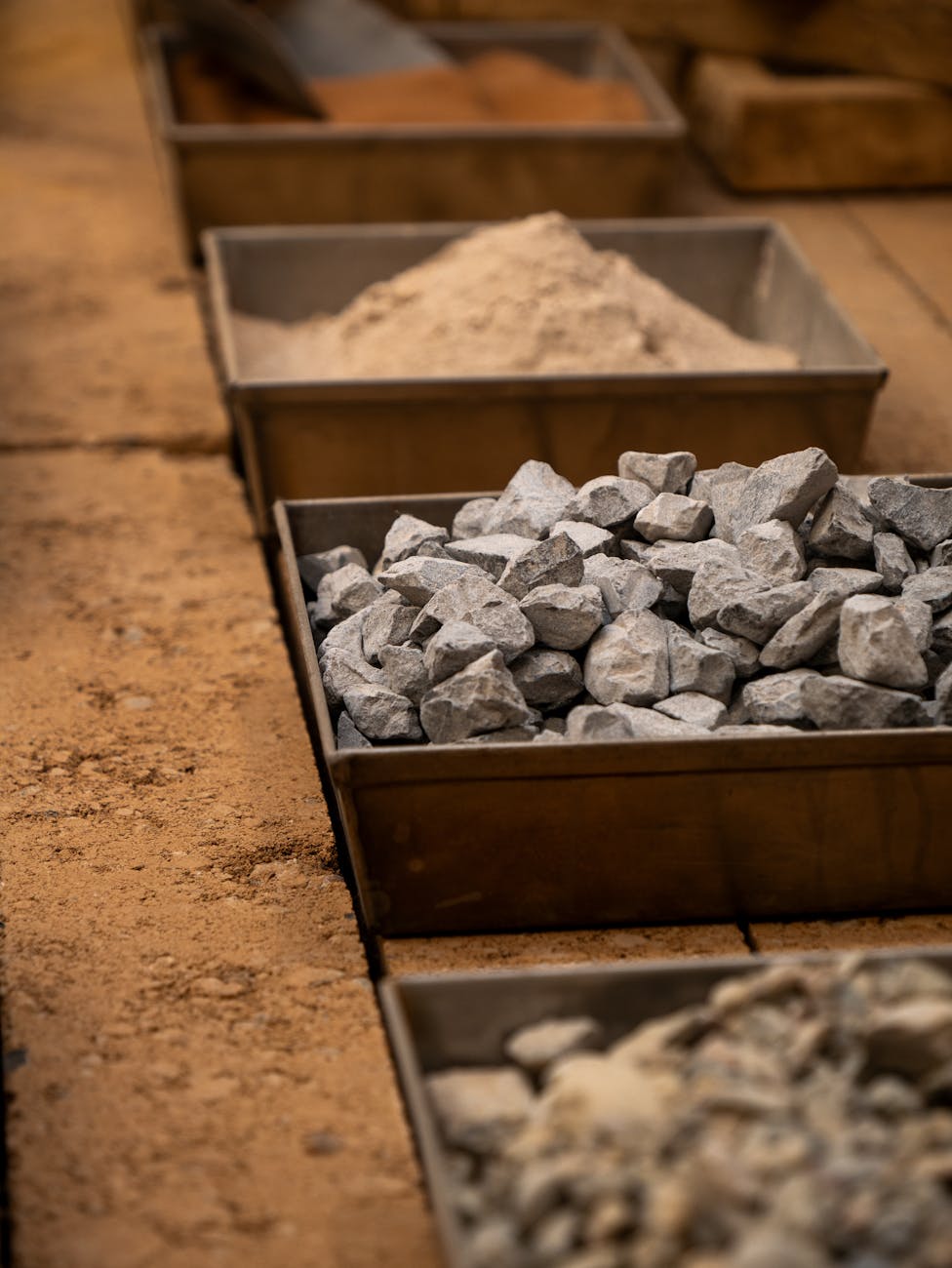
But the old equation—the one that says you use what’s close—still exists for makers. Access isn’t money; it’s proximity, skill, and time. You can acquire a rabbit pelt for the price of a quick lunch if you know who to ask. You can barter for bulk offcuts if you’re willing to take what’s irregular or odd-colored. You can clean a skull if you know how to simmer and scrape without cracking it, then bleach without erasing the delicate sutures. None of this is free. It costs knowledge. It costs a tolerance for smell and mess. It costs time. Those costs do not show in a final arrangement where everything is purified for the frame.
The paradox is vicious: the better you are at transforming inexpensive natural materials into visual richness, the more your work will be read as financially rich—and therefore inauthentic if you claim struggle. The very skill that keeps you afloat—knowing where to find, how to fix, what to salvage—erases itself as soon as it succeeds.
The Catch-22 of Looking
Aesthetic richness collides with moral suspicion in the case of animal materials. The closer your work gets to the animalness of the material, the more people project onto it. A tanned hide calls to mind a body. Feathers imply a plucked bird. Antler—though shed naturally—conjures the hunt. If I say I work with hunters, I am coded as complicit; if I say I thrift furs, I am coded as performing decadence on a budget; if I say I cast synthetic replicas, I am coded as “less authentic.” Pick your poison. Either way, the act of looking is surveilled by a tangle of ethics that are, themselves, often class-coded.
Large industries render animal products invisible, standardized, odorless. Leather shoes appear in boxes without a story; belts hang on racks without skin. Their acceptability is a function of distance. When an artist short-circuits that distance—by working with hair-on hides, identifiable pelts, antlers, bones—people feel the nearness of life and death again. They call it “graphic,” “problematic,” or “provocative” as if the discomfort were an indictment of the maker rather than an index of the material world. Meanwhile, those same viewers may be wearing leather soles, eating a burger, or lounging on a leather couch that never forced them to smell the tannins.
So the bind is this: if you work with the real, you risk being read as cruel or wasteful or out-of-touch because you’ve violated the social contract that says death must be hidden. If you work with imitation, you risk being read as kitsch or cheap. If you work with reclaimed materials, you risk the accusation that you are dressing poverty in velvet. The only safe options are the ones that stay far enough away from the animal that viewers can pretend it never existed—or the ones so spectacularly expensive that no one questions how they came to be.
Price vs. Signal
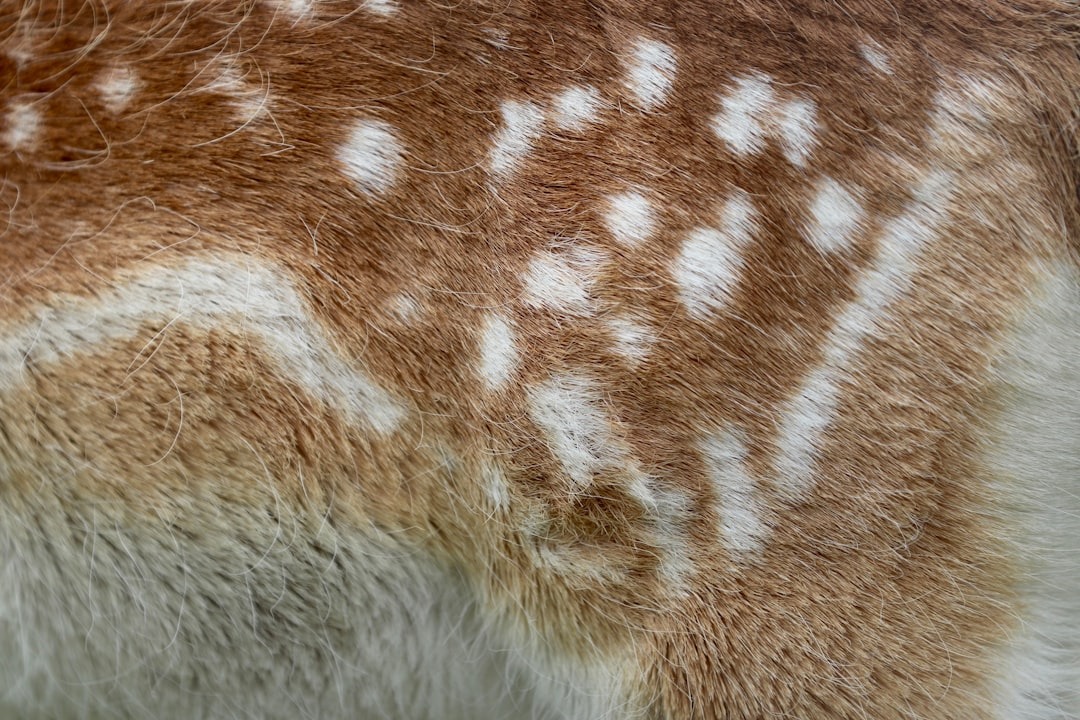
When I tell people that a rabbit pelt can cost less than dinner and that a full hair-on cowhide can cost a month’s rent, they blink. The economy of animal materials isn’t intuitive because the visual system speaks louder than the ledger. Size, grade, provenance, and finish matter more to price than the generic category “fur” or “hide.” A tiny, dyed, imperfect pelt is cheap. A large, pristine, patterned cowhide—tanned smoothly, hair intact, color even—soars into four figures. But if I place the small pelt in a careful still life—pearlescent beads, a sliver of mirror, a velvet drape—the semiotics overwhelm the difference. The image reads as “expensive.” I can’t count the times I’ve had to explain the difference between a symbol and a cost.
This misreading has consequences. When people assume that special-looking materials imply disposable income, they discount need and grit. They assume the work is funded by hidden wealth or sugar-daddy patrons or family money or—if they are being generous—by a thriving practice. This can close doors in communities where “struggling” is a credential of solidarity. It can also close wallets among patrons who believe they are supporting someone who “doesn’t need it.” The myth of the starving artist is alive and well until the artist’s materials look satiated.
The Knowledge That “Doesn’t Count”
Here is something that never seems to register as “value”: knowing where to get things and how to handle them.
Knowing the smell of tannins when they’re fresh and when they’ve turned. Knowing that some hides will shed if you look at them sideways and others will take abuse. Knowing how to remove a fat deposit without ripping the membrane, how to comb burrs out of a tail without breaking the fibers, how to disinfect without bleaching the life out of the strand. Knowing which dye will take on which protein and at what dilution. Knowing the difference between goat and rabbit by hand, not by label. This is craft; it’s also science with a sink and no lab coat.
Because this knowledge belongs to the realm of the practical, it is often reduced to “resourcefulness,” as if it were mere personality. It is, in fact, a thick form of cultural capital that doesn’t always translate into money. In the economies of art and taste, knowledge counts when it is theoretical, cited, or printed. Low, bodily knowledge—the kind you store in your fingers—gets ignored, and so the people who possess it get missorted. Viewers do not see a skill set; they see a prop closet.
The Gender of Texture
Textures are gendered in the popular imagination. Fur, silk, velvet—these read as feminine luxury, the boudoir and the salon. Hide, antler, bone—these read as masculine rusticity, the lodge and the hunt. Both categories are performances of authenticity: the boudoir promises a cultivated softness; the lodge promises a cultivated ruggedness. Both categories cost real money at retail, and both can be assembled cheaply with knowledge and patience. But in the mind’s eye, they don’t occupy the same moral terrain. Feminine luxury is more likely to be accused of decadence; masculine rusticity is more likely to be excused as heritage or tradition.
When an artist mixes these textures, the gender script blurs. A velvet-draped skull? Too theatrical for the lodge, too frank for the salon. A hair-on hide paired with rhinestones? Too “extra” for the cabin, too animal for the drawing room. The mixture stops the semiotic machine from doing its smooth translation; the viewer has to do work. Not everyone appreciates being forced into literacy. Some punish the provocation by retreating into assumptions: You must be rich, You must be heartless, You must be naïve. It’s easier than admitting the codes don’t fit.
The Ethics People Want From You
People do not want your ethics; they want their own ethics reflected back at them by your materials. If you tell them the fur is vintage, some feel better because the harm is “sunk.” If you tell them it’s from a trapper who uses the whole animal, some feel better because it fulfills a use-everything narrative. If you tell them it’s ranch-raised, some feel better because it’s regulated; others feel worse because it’s industrial. If you tell them it’s roadkill salvage, some feel better because it would have rotted anyway; others feel worse because it introduces the realism of a tire.
I don’t say this to claim ethics don’t matter. They do. They matter more when the maker is accountable to the line between life and death, more when hands touch what we prefer to outsource. But the ethics people want are often narrative cosmetics—stories to avoid discomfort rather than principles they can live with consistently. The person upset by a vintage pelt may be fine with leather car seats; the person thrilled by roadkill rescue may balk at a farmed hide that was humanely processed. The burden to make everyone comfortable falls, predictably, on the person most proximate to the facts.
The Internet Made It Worse
Online, the conflation of aesthetic richness and financial richness accelerates. Platforms reward images that read in milliseconds. Texture—the language of touch—travels well on screens designed to be touched. Velvet, fur, satin, hide: they spike engagement because the eye can feel them. But any caption explaining the thrift, the salvage, the barter, the ethics will be ignored by a significant percentage of viewers who have already decided what they’re seeing. The algorithm then feeds the judgment back to you as a market: People like the fur shots. Give them more. Soon, you’re curating to survive, and the very content that keeps the lights on convinces strangers you don’t need help paying the bill.
The internet also collapses context. A cowhide in a ranching region reads like a local material; the same hide in an urban studio reads like a rich person’s rug. A rabbit pelt in a rural thrift store is an afterthought; in a glossy still life, it’s a luxury signifier. Without the context of where something came from or how it was obtained, the eye leans on stereotype. Stereotype is fast. Nuance is slow. Speed wins.
What It Costs to Keep Things Clean
Let’s talk about dirt. When people say natural materials are “dirty,” they usually mean two things at once: literally, that they can carry oils, dust, dander, bacteria; and symbolically, that they are morally suspect. Dirt is both matter out of place and class out of place. I spend more time than anyone guesses on the literal kind—vacuuming hair, brushing pelts with wire and boar-bristle, sealing edges, airing in the cold, spot-cleaning with alcohol, bagging with cedar, tracking humidity. Every precaution has a price in time and supplies, and every precaution renders the thing more apparently “effortless.”
The moral dirt is harder. It adheres to stories: You killed this. You don’t care. You are flaunting wealth. You are aestheticizing poverty. You are manipulating sympathy. There is no universal solvent for these, only the slower labor of conversation and consistency. If I love these materials, it is because they refuse to lie about being of the world. Even bleached bone remembers having been a body. Even a vintage fur keeps the heat of an animal in its idea. This fidelity is not dirty to me. It is honest. If honesty makes people uncomfortable, the problem isn’t the pelt.
The Invisibility of Risk
Working with natural materials carries risks that are also forms of devotion: to one’s health (dust, mites, chemicals), to one’s relationships (the inevitable conflict over animal use), to one’s reputation (the cultural winds that swing between romanticizing and vilifying). Each risk is a price. When people assume materials equal money, they miss the ledger that actually matters: how much of yourself you are spending to do the work.
The irony is that synthetic stand-ins often cost more money for less meaning. A manufactured “faux” hide rug can be pricey and shed microplastics into the world; a small, real pelt sourced as waste may cost a tenth as much and last longer. A plastic antler cast can cost more per ounce than the real thing found in the woods. But the eye, trained by retail, may see the faux as morally clean and the real as morally contaminated—because nothing died “for” the object. This logic ignores the deaths that industrial synthetics owe upstream and the fact that many natural materials arrive as byproducts. But again: nuance is slow. We are living fast.
The Social Tax
A friend tells me that minimalism has an easier time being read as ethical because it refuses excess. I tell them minimalism has a head start; it is already the house style of tech wealth. White walls and linen are the uniform of people who can afford the empty space. Maximalism—the lush, the tactile, the layered—reads as trying too hard unless the price tag is obvious. Natural materials in a maximalist context are especially suspect because they suggest appetites: warmth, touch, glamour, drama, sex, death. Appetite is policed more heavily in those without social permission to want.
This is why conversations with other creators can feel fraught. Those who use clean modern materials may see my work and suspect it flaunts tradition. Those from strong ethical stances may see my work and suspect it rationalizes harm. Those who’ve paid retail for their natural materials may assume I’ve done the same and resent the implied ease. And those who understand the salvage economy may feel a kinship that is, itself, coded as “poor.” It can be lonely to sit at a table where your centerpiece offends someone and seduces someone else, and everyone is sure their reaction proves something about you.
The Value of Contact
What, then, is the value of working with natural materials if doing so distorts how you are seen? For me, it is contact. The world is less virtual when you’re combing a pelt or burnishing leather or lifting a heavy hide. Bodies exist; they warm and stink and shed and stain. Death exists; it’s not elegant. Time exists; it’s built into grain and growth rings and the slow chemical patience of tanning. Photography can make any of this look like a dream; the work behind the photograph refuses to be a dream. I am not arguing for purity here. I am arguing for intimacy.
This intimacy is its own form of richness—richer than a credit card, poorer than a myth. It insists that value can be a function of attention, of repair, of stewardship, of refusing to let materials become abstract. It respects the animal by keeping it animal in some way, even as it becomes an art object. It respects the land by using what exists rather than calling Amazon. It respects craft by demanding competence instead of letting the factory force you into dependence. The money involved can be small or large; the value involved is not measured on that axis.
Practical Notes for Reading What You See
If I could give audiences a rubric for looking at natural materials, it would be this:
- Ask about provenance, not price. “Where did this come from?” is a better question than “How much did this cost?” The answer will tell you whether you’re looking at knowledge, luck, or money—or a blend.
- Respect invisible labor. Cleaning, curing, repairing, and maintaining are hours you don’t see. Assume they happened.
- Distinguish category from grade. “Fur” isn’t a price. Size, hair quality, tanning quality, and pattern are.
- Mind the double standard. If you accept leather belts but recoil at a hair-on hide, interrogate the distance you prefer between yourself and the animal.
- Remember that aesthetics are old propaganda. Your reaction is not just yours; it’s centuries of class codes humming in your retina. That doesn’t make it wrong. It makes it historical.
Reclaiming the Right to “Look Rich”
I am not ashamed if my work looks rich. Looking rich is sometimes the only way people will stop scrolling. Looking rich is centuries of visual language I didn’t invent and won’t apologize for learning to speak. Looking rich, in my case, is also a testament to looking hard: into estate sale closets, into the bins at the back, into the offcut piles, into the road’s edges, into the hands of people who still know how to skin and stretch and salt. The “richness” is a form of attention—mine toward the material, and the viewer’s toward the image.
If there is a plea at the end of all this, it is simple: let us uncouple material signal from moral certainty. Let us read natural materials with the same nuance we reserve for “sustainable” synthetics or “ethical” minimalism. Let us allow makers to be broke and excellent, to be ethical and tactile, to be elaborate without being assumed to be extravagant. Let us admit that the contact we fear—the touch of animalness, the stain of labor, the whiff of mortality—is the same contact that makes art feel alive.
What Remains
Natural materials are not a sign of wealth. They are a sign of proximity. Proximity to animals, to land, to craft, to mess, to the sorts of knowledge you learn with your hands and lungs and nose. They are a reminder of the debts beauty owes to bodies—not just the bodies of animals but the bodies of makers who lift and scrape and brush and breathe.
If my work sometimes looks like a boudoir and sometimes like a lodge and sometimes like a shrine, it is because those are the rooms where texture was historically allowed to speak without apology. I’m not asking for permission to use them. I am asking for a literacy that can tell the difference between a symbol and a cost, between an image and a life, between a polished surface and the stubborn, honest, necessary dirt underneath. If the result looks rich, it’s only because it’s real. And if that confuses our class codes, perhaps the codes were never very helpful to begin with.
If reflections like this speak to you, you can support independent creativity through the Mutual Aid Fund or by exploring the Shop: Made by Me | Oddities & Convenience. If you’d like: you can follow us on Medium, itch.io, or on ko-fi as well.